* I do earn a small commission from affiliate links
I love seeing how other families structure their homeschool days, so I thought I’d share what we’re using this year for curriculum. Every child learns differently, and one of the gifts of homeschooling is being able to meet them where they are. This is what’s working for us right now.
Handwriting
We’ve used The Good and The Beautiful handwriting books from the very beginning. They start with a preschool pre-writing level—things like connecting the dots, tracing simple lines, and developing fine motor skills. From there, the books progress all the way through cursive. Each of my kids is working at their own level, and we’ll be continuing with this program again this year.
Language Arts
For language arts, we also use The Good and The Beautiful, and I can’t say enough good things about it. It’s a very comprehensive curriculum that covers reading, writing, grammar, poetry, spelling, geography, art, and even a little history and science. The variety keeps my kids’ attention because no two lessons feel exactly the same.
Something that often comes up when I mention The Good and the Beautiful is the faith aspect. Here’s what I’ve found:
- The curriculum mentions God and creation throughout, but it doesn’t dive into theology or doctrine.
- Occasionally, you’ll find copywork with short Bible verses or sentences such as “Jesus loves me. He is my shepherd. I trust the Lord.”
- Poems and stories may reference God, but always in a gentle and natural way.
So, while it’s not a “biblical curriculum” in the sense of teaching the gospel, it does weave in faith-filled statements and principles. Personally, I appreciate this perspective.
One thing to note: their language arts tends to be advanced compared to grade levels in public school. For example, it’s normal for a 3rd grader to be working in Level 1. Don’t get hung up on matching grade levels—focus on your child’s skill level. Otherwise, it can lead to unnecessary frustration and tears.
Spelling
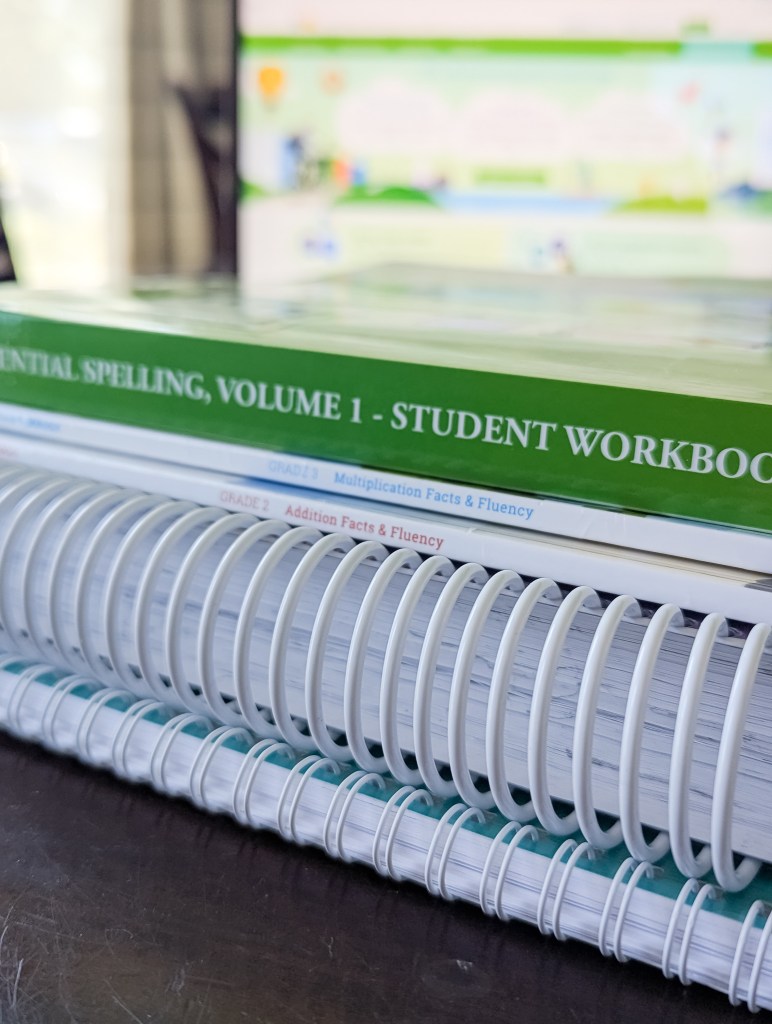
While The Good and the Beautiful includes spelling, I’ve found sequential spelling to be an excellent supplement, especially for remediation. It was recommended by a dyslexia coach, and it’s been so helpful for my older kids.
Here’s how it works: the lessons start with a simple word like all and then build into related words—tall, stall, install, installment. The kids work through one lesson a day plus a short worksheet. I suggest starting at Level 1 whether you’re using it for remediation or with younger students (around 3rd or 4th grade).
Math
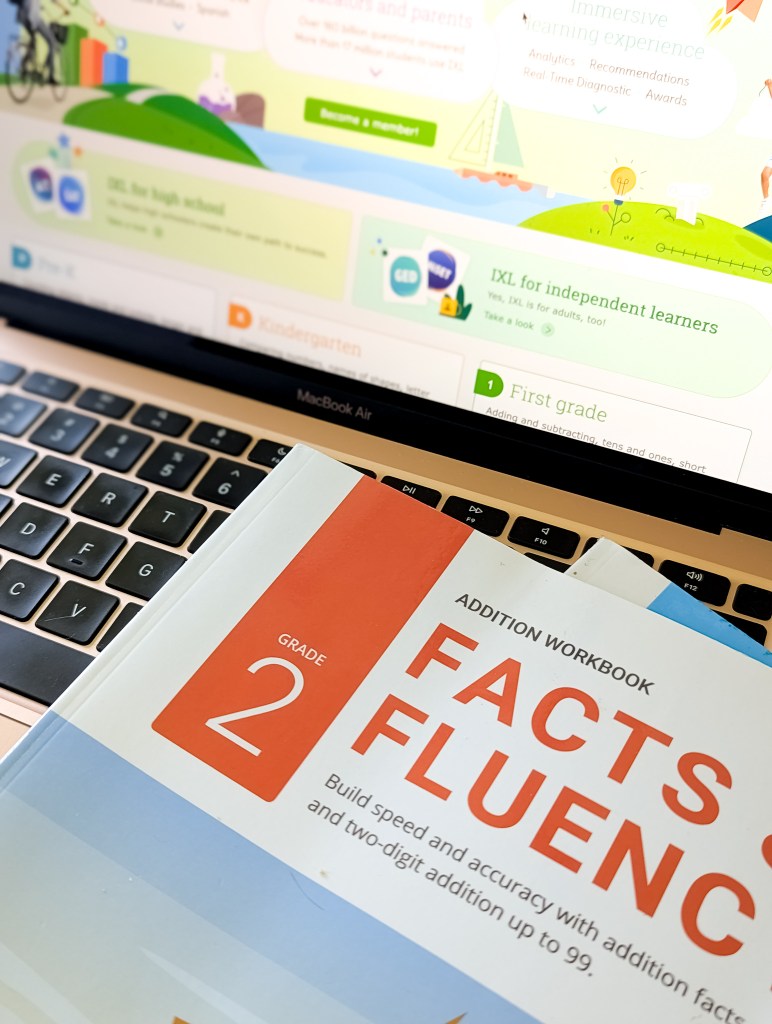
For math, we use a combination of resources. The Good and the Beautiful Math for my younger kids (through about 3rd grade). I love how hands-on and engaging it is. For my older kids, we use IXL Learning. We switched to this because it focuses on mastery. They have to reach a certain number of points before moving on, which was exactly what we needed.
The spiral approach in The Good and the Beautiful worked well in the early grades, but by 4th and 5th grade it wasn’t the best fit for us. IXL has been a great transition.
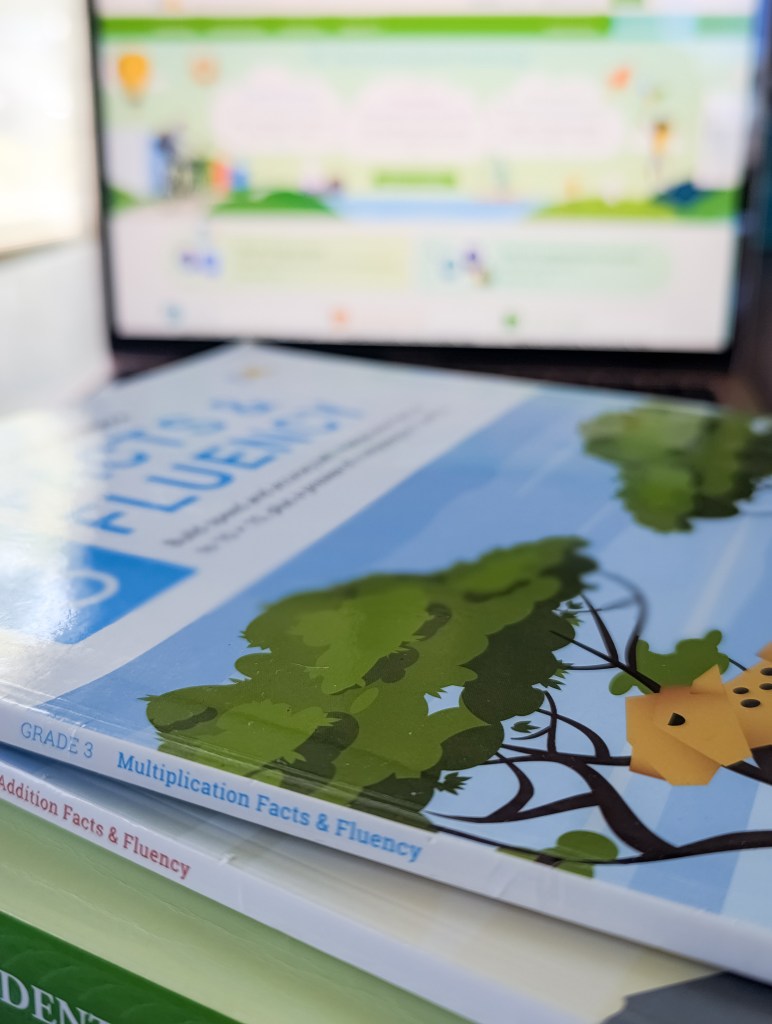
I also keep some multiplication fact fluency workbooks on hand. These are great for busy weeks when I need something simple to reinforce math without adding a full lesson.
Extras and Enrichment
- Pod School: This year, my kids will be attending pod school for human anatomy and world geography. My older two will also take a history class there.
- Typing: My older kids are working through a free online typing course and have enjoyed it.
- Music: We have a music teacher for flute and piano, and possibly voice lessons in the future. The kids also participate in choir and sports.
People often ask, “What do you do all day?” The truth is, our days are full, but not overwhelming. My younger two usually finish their schoolwork in about 2 hours. My older two take closer to 4 hours, including music practice. That still leaves plenty of time for free play, creative projects, and evening activities.
Homeschooling looks different for every family, but I hope this gives you a glimpse into how we make it work. Our curriculum lineup has evolved over the years, and I love that flexibility—it’s one of the biggest gifts of homeschooling.
 Terms & Prvacy policy